If you’re a homeowner, one of the most important things you can know about your property is how old your roof is — and how much life it has left. Whether you’re planning for a future replacement, buying or selling a home, or just trying to understand what you’re working with, knowing the expected lifespan of your roofing material is essential.
At Cal Coast Roofing, we work with homeowners throughout San Jose, Saratoga, Santa Cruz, and the South Bay every day — and one of the most common questions we hear is: “How long should my roof last?” The honest answer is that it depends on several variables. Here’s a complete breakdown.
Roof Lifespan by Material Type
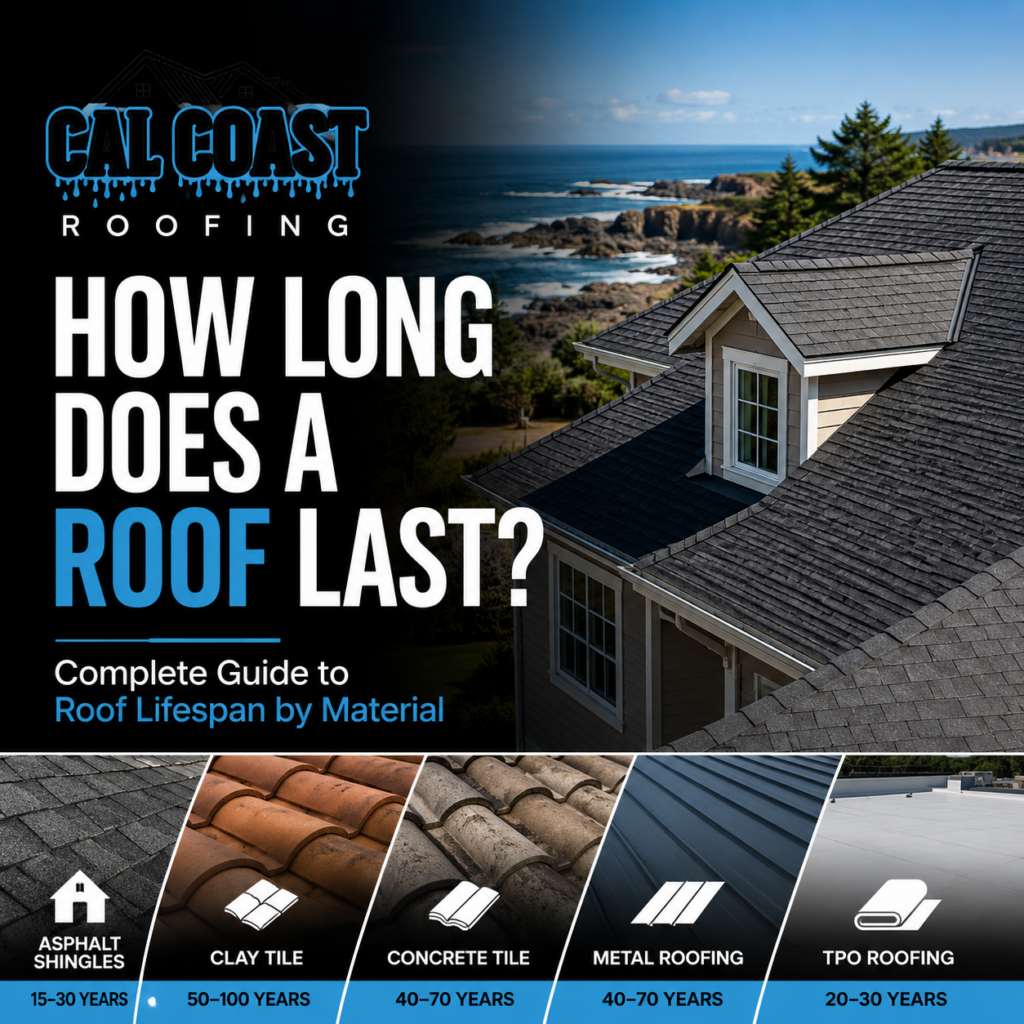
3-Tab Asphalt Shingles: 15–20 Years
Three-tab asphalt shingles were the dominant roofing material for most of the 20th century, and they’re still found on many older homes throughout California. They’re lightweight, inexpensive, and relatively easy to install — but they’re also the least durable option in the asphalt shingle category.
Three-tab shingles are a single-layer product, which makes them more susceptible to wind uplift and less resistant to impact than their thicker counterparts. If your home was built or re-roofed before 2005 with standard asphalt shingles and you haven’t replaced them since, there’s a strong chance your roof is reaching or has already exceeded its expected lifespan.
Signs it’s time: widespread granule loss, curling or cupping shingles, recurring leaks in multiple locations.
Architectural (Dimensional) Shingles: 25–30 Years
Architectural shingles — also called laminate or dimensional shingles — are the modern standard for residential roofing. They’re made from multiple bonded layers of asphalt, which gives them a thicker profile, a more attractive dimensional appearance, and significantly better durability than 3-tab products.
Top manufacturers like GAF, CertainTeed, and Owens Corning produce architectural shingle lines backed by 30-year limited warranties, and many of these products are rated to withstand winds up to 110–130 mph. Architectural shingles are the most common material we install at Cal Coast Roofing because they offer the best balance of cost, performance, and longevity for most Bay Area homeowners.
Best for: most residential re-roofing projects; homeowners who want reliable protection without the premium cost of metal or tile.
Premium Asphalt Shingles (Designer / Impact-Resistant): 30–40 Years
Premium asphalt shingles — such as GAF’s Camelot or Timberline HDZ, or CertainTeed’s Presidential Shake — are thick, impact-resistant, and designed to mimic the look of wood shake or slate at a fraction of the cost. Many carry Class 4 impact resistance ratings, which can qualify homeowners for insurance discounts in some areas.
These products cost more upfront but deliver meaningfully longer service life and added weather protection. For homeowners who want the look of premium materials with easier installation and maintenance, this category is worth the investment.
Metal Roofing (Standing Seam / Metal Tile): 40–70 Years
Metal roofing has become increasingly popular in California for good reason. Standing seam metal and metal tile products are among the most durable roofing systems available for residential use. They shed water and snow efficiently, are highly resistant to fire and wind, reflect heat to reduce cooling costs, and require very little maintenance over their long lifespan.
Standing seam metal roofs — where the metal panels interlock and fasteners are hidden — are especially durable because there are no exposed fastener holes that can allow water infiltration over time. Metal roofs from quality manufacturers like Taylor Metal can realistically last 50–70 years with minimal intervention.
The primary drawback is upfront cost, which is typically 2–3x that of architectural asphalt shingles. However, when you factor in the lifespan difference, the long-term cost per year is often comparable or even lower.
Best for: homeowners planning to stay long-term; homes in areas with significant sun exposure; anyone who wants a “install it and forget it” roofing system.
Clay and Concrete Tile: 50+ Years
Clay and concrete tile roofing is a staple of California architecture, particularly in Mediterranean and Spanish-style homes. Tile roofs are beautiful, fire-resistant, and exceptionally long-lasting — the tiles themselves can last 50–100 years under normal conditions.
There’s an important nuance, however: the tiles are only part of the roofing system. The underlayment beneath the tiles has a much shorter lifespan, typically 20–30 years. This means that even if your tile roof looks fine from the outside, the waterproofing layer underneath may need replacement. Many homeowners are surprised to learn their tile roof needs work despite the tiles looking intact.
Best for: Mediterranean, Spanish, and California ranch-style homes; homeowners who want a traditional aesthetic with exceptional longevity.
Flat / Low-Slope Roofing (TPO, Modified Bitumen): 15–25 Years
Flat and low-slope roofing systems require entirely different materials than pitched roofs. The most common modern options are TPO (thermoplastic polyolefin) membranes and modified bitumen systems, both of which form a continuous waterproof barrier across the roof surface.
Modern TPO systems are durable, energy-efficient (white TPO reflects heat), and cost-effective. Lifespan depends heavily on installation quality, proper drainage, and regular maintenance. Flat roofs are especially sensitive to standing water — even minor drainage issues can dramatically shorten their lifespan.
Best for: commercial buildings, modern residential flat-roof designs, additions and low-slope sections of otherwise pitched roofs.
Factors That Affect How Long Any Roof Lasts
Knowing your material’s expected lifespan is only part of the equation. These additional factors have a significant impact on how long your specific roof will actually last:
Installation Quality
This is the single biggest variable. Even premium materials will fail prematurely if installed by an inexperienced or unlicensed contractor. Proper underlayment installation, correct flashing techniques, and accurate nailing patterns all directly affect how well your roof performs and how long it lasts.
Attic Ventilation
Poor attic ventilation traps heat and moisture in your attic space. Heat accelerates shingle degradation from below, while trapped moisture causes wood rot and mold. A properly ventilated attic can add years to your roof’s lifespan. This is something we evaluate during every inspection at Cal Coast Roofing.
Maintenance and Inspections
Roofs that are inspected annually — and have small repairs made promptly — consistently outlast neglected roofs by years. A $300 flashing repair caught early prevents a $5,000 interior water damage claim later.
California Climate
The Bay Area’s mild climate is generally gentle on roofing materials, but UV exposure is significant year-round, coastal moisture affects metal and wood components, and the seasonal swing between dry summers and wet winters creates thermal cycling stress on all materials.
How to Know If Your Roof Needs Replacement
If your roof is within 5 years of the end of its expected lifespan — or if you’re experiencing recurring leaks, widespread shingle damage, or visible structural issues — it’s time to plan for replacement rather than continue with repairs.
The most reliable way to know exactly where you stand is a professional inspection from a licensed roofing contractor.
Get a Free Roof Evaluation from Cal Coast Roofing
Cal Coast Roofing serves homeowners throughout San Jose, Saratoga, Los Gatos, Campbell, Santa Cruz, Scotts Valley, and the greater South Bay. We provide free, no-pressure roof inspections and honest recommendations based on the actual condition of your roof — not a sales agenda.
Whether your roof is 5 years old or 30, we’ll give you a clear picture of its current condition, remaining lifespan, and the best path forward for your home and budget. Contact us today to schedule your free inspection.