Your roof is your home’s first line of defense — protecting everything inside from rain, wind, heat, and cold. But because most homeowners rarely look up, small problems can quietly grow into major, expensive damage before anyone notices. The key to avoiding a roof emergency is knowing what to look for and acting quickly when something seems off.
At Cal Coast Roofing, we inspect hundreds of roofs every year throughout San Jose, Saratoga, Los Gatos, Santa Cruz, and the surrounding South Bay. The most expensive repairs we see are almost always problems that started small. Here are the five most important warning signs that your roof needs attention — and why you shouldn’t wait. Schedule a roof repair or roof replacement.
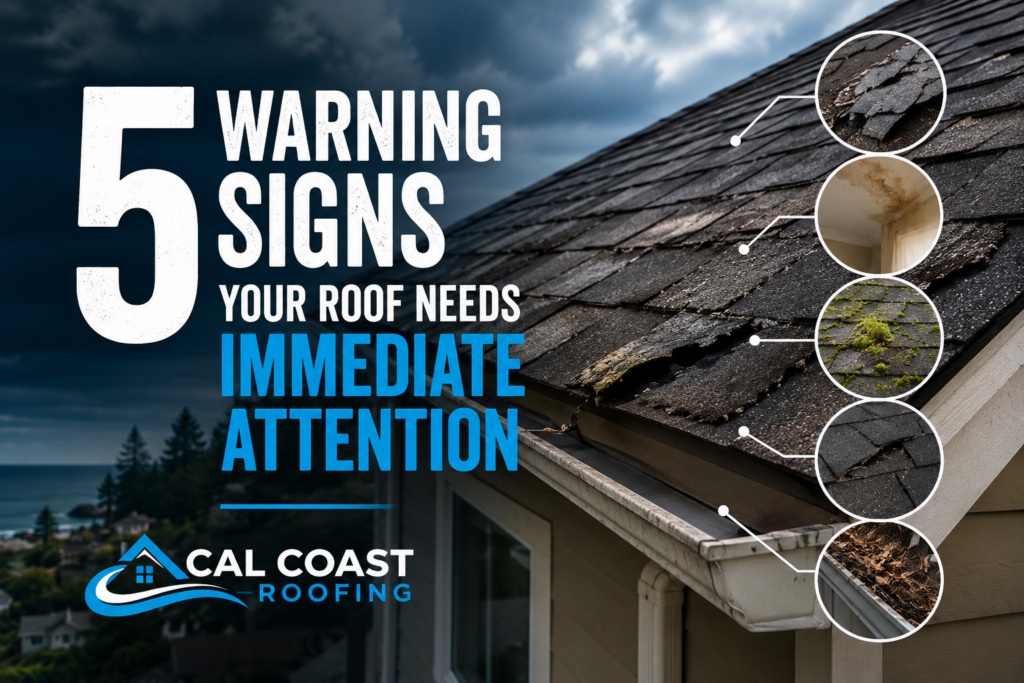
Warning Sign #1: Water Stains on Your Ceilings or Walls
What It Looks Like
Brownish or yellowish discoloration on your interior ceiling, often circular or spreading outward from a central point. You may also notice paint bubbling, drywall that feels soft to the touch, or visible mold beginning to form near the stain.
Why It Matters
Interior water staining is one of the most direct signals of an active or recent roof leak. Even if the stain feels dry right now, the source is almost certainly still allowing water in — and moisture damage to your attic insulation, framing, and drywall compounds over time.
One important thing homeowners often miss: water travels. The leak entry point on your roof may be several feet away from where you see the stain inside. Don’t assume the problem is minor just because the stain is small.
What To Do
Stop applying temporary patches and contact a professional for a thorough inspection. Getting ahead of a roof leak before the next rainstorm is almost always far less expensive than dealing with water damage after the fact.
Warning Sign #2: Missing, Cracked, or Curling Shingles
What It Looks Like
After any significant wind event or storm, walk around your home and look at your roofline from the ground. Missing shingles create obvious gaps. Cracked shingles may appear as dark lines running across the surface. Curling shingles either lift at the edges (cupping) or curl upward in the middle (clawing), both of which indicate aging or heat damage.
Why It Matters
Shingles are your roof’s primary weather barrier. When they’re missing or compromised, the underlayment and decking beneath them are directly exposed to UV rays, wind-driven rain, and debris. Even a single missing shingle can allow water to infiltrate and begin rotting the wood decking below — and water damage spreads quickly once it starts.
Curling is particularly telling because it indicates your shingles have lost their flexibility, meaning they’re near the end of their useful lifespan and are likely to crack or blow off in the next major storm.
What To Do
If you notice shingles in your yard, in your gutters, or on the ground near your home after a storm — or if you can see irregular patches of discoloration on your roofline — schedule a professional inspection. In many cases, localized shingle damage can be repaired without a full roof replacement if caught early.
Warning Sign #3: Granules in Your Gutters
What It Looks Like
When you clean your gutters, you notice a significant amount of dark, sand-like material that resembles coarse black pepper or coffee grounds. You may also notice thin, light-colored patches on your shingles where the surface appears worn away.
Why It Matters
Asphalt shingles are coated with mineral granules that serve two critical functions: they protect the asphalt layer from UV degradation, and they give the shingle its fire-resistant properties. As shingles age, these granules begin to loosen and wash off with every rain.
Some granule shedding is normal on a new roof as excess granules settle. But if you’re finding large quantities consistently, it’s a sign your shingles are significantly aged. Once granule loss accelerates, shingles deteriorate rapidly — losing thickness, flexibility, and the ability to shed water effectively.
What To Do
Granule loss in your gutters doesn’t mean you need an immediate emergency repair, but it does mean your roof is in the later stages of its lifespan. Have it professionally evaluated to understand how much life it has left so you can plan and budget proactively rather than reactively.
Warning Sign #4: A Sagging or Drooping Roofline
What It Looks Like
Standing at the corner of your property and looking along the ridge of your roof, the line should be straight and level. A sagging roofline will appear to dip or bow in certain sections. You may also notice sections of the roof surface that look uneven or depressed compared to surrounding areas.
Why It Matters
A sagging roofline is one of the most serious structural warning signs a homeowner can observe. It almost always indicates that moisture has been present long enough to weaken or rot the decking, rafters, or other structural framing members beneath the surface. This is not a cosmetic issue that can be deferred — a structurally compromised roof carries real safety risks, including the possibility of collapse under the weight of heavy rain, accumulated debris, or a person performing maintenance.
What To Do
If you see any sagging or drooping, contact a roofing professional immediately. This is not a wait-and-see situation. The sooner a structural issue is addressed, the more likely it is that targeted repairs can solve the problem rather than requiring a full tear-off and replacement.
Warning Sign #5: Daylight Visible in Your Attic
What It Looks Like
On a sunny day, access your attic and turn off any lights. Look upward toward the roof decking. If you can see pinpoints or streaks of light coming through, you have gaps or holes in your roof. Also look for dark streaks on the wood (indicating past or current moisture), soft or spongy spots in the decking, or frost on the rafters in winter months.
Why It Matters
If light can get through, water can too — and has probably already been doing so. Gaps in your roof can develop from deteriorated caulking, failed flashing, cracked ridge caps, or simply age-related shrinkage. These gaps allow moisture to accumulate in your attic over time, leading to mold growth, insulation damage, and wood rot that may not be visible from the outside.
What To Do
An attic inspection is actually one of the most revealing parts of any professional roof evaluation. If you’re seeing light, moisture staining, or soft wood during your own walk-through, those are definitive signs that your roof needs professional attention as soon as possible.
Don’t Wait — Schedule Your Free Inspection
The biggest mistake homeowners make is treating roof problems as something to deal with “eventually.” Every day a leak goes unaddressed is another day of potential damage to your attic, insulation, framing, and interior finishes.
Cal Coast Roofing provides free roof inspections for homeowners throughout San Jose, Saratoga, Los Gatos, Campbell, Santa Cruz, Scotts Valley, and the surrounding South Bay. Our experienced team will assess every component of your roof, give you an honest evaluation, and walk you through your options — with no pressure and no surprises.
Call us today or fill out our online form to book your free inspection. Catching problems early is always less expensive than dealing with them after the damage is done.