When your roof is damaged, one of the first questions on most homeowners’ minds is: will my insurance cover this? The answer depends on the cause of the damage, the age of your roof, your specific policy terms, and how the claim is documented. Understanding the basics before you need to file a claim can save you significant time, money, and frustration.
At Cal Coast Roofing, we work with homeowners throughout the South Bay and Santa Cruz areas who are navigating the insurance claims process. Here’s a straightforward breakdown of how homeowners insurance typically handles roof storm damage in California.
What Types of Roof Damage Are Usually Covered?
Standard homeowners insurance policies are “named peril” or “open peril” policies. Most modern policies are open peril (also called all-risk), which means they cover damage from any cause except those specifically excluded. The covered causes of roof damage most relevant to Bay Area homeowners include:
Wind and Storm Damage
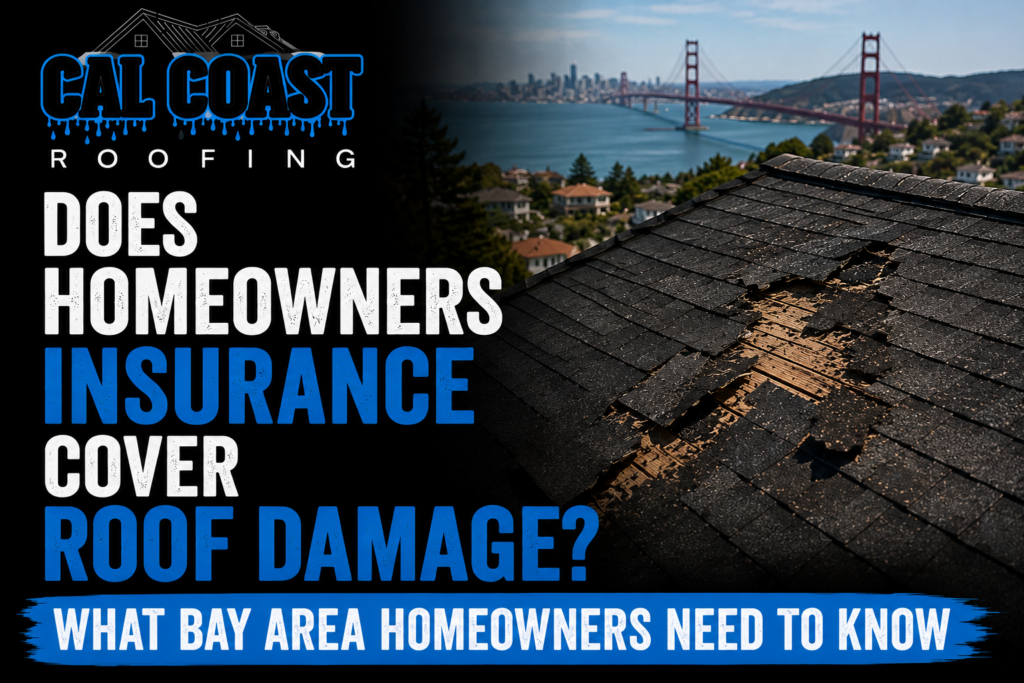
Wind is one of the most common causes of roof damage in our region. High winds can lift and remove shingles, damage ridge caps, and bend or detach flashings. If a storm causes visible damage to your roof, that event is typically covered under most standard homeowners policies.
Falling Trees and Debris
If a tree or large branch falls onto your roof during a storm or due to wind, the resulting structural damage is generally covered. This applies even if the tree originated from a neighbor’s property.
Fire Damage
Fire damage to a roof — whether from a house fire, wildfire ember damage, or lightning strike — is covered under virtually all standard homeowners policies.
Hail Damage
Hail is less common in the Bay Area than in other parts of the country, but it does occur — particularly in inland South Bay areas during winter storm systems. Hail damage to shingles can be covered, though adjusters look carefully to distinguish genuine hail impacts from granule loss due to normal wear.
What Is Typically NOT Covered?
Understanding exclusions is just as important as understanding coverage. Several categories of roof damage are commonly excluded from standard homeowners insurance policies:
Normal Wear and Tear
This is the most common reason roof claims are denied. If your roof has simply aged past its useful lifespan and is leaking or failing as a result, that’s considered normal wear and tear — and it is not covered by insurance. Homeowners insurance is designed to cover sudden, accidental damage, not gradual deterioration.
Lack of Maintenance
If an adjuster determines that damage was caused or significantly worsened by the homeowner’s failure to maintain the roof — for example, a known small leak that was ignored for years until it caused major structural damage — the claim may be partially or fully denied on grounds of negligence.
Pre-Existing Damage
If your roof had existing damage prior to a storm event, the insurer will typically only cover damage that can be clearly attributed to the new event, not conditions that were already present.
Certain Natural Events (Check Your Policy)
In California, earthquake damage requires separate earthquake insurance. Flood damage requires a separate flood policy through the National Flood Insurance Program. Standard homeowners policies exclude both.
How Roof Age Affects Your Claim
In California, how your insurer handles a roof claim often depends on the age of the roof — specifically whether they pay actual cash value (ACV) or replacement cost value (RCV).
Replacement Cost Value (RCV)
RCV policies pay the full cost to replace your damaged roof with a new one of similar quality, minus your deductible. This is the most favorable coverage for homeowners and is standard on most newer policies.
Actual Cash Value (ACV)
ACV policies depreciate the value of your roof based on its age before calculating the payout. A 15-year-old asphalt shingle roof with a 20-year expected lifespan might be considered 75% depreciated — meaning the insurer only pays 25% of the replacement cost, minus your deductible. On an older roof, this can result in a payout that covers only a fraction of actual repair or replacement costs.
Some insurers in California have also begun issuing policies that cap coverage for older roofs or require higher deductibles for wind and hail damage. Review your policy carefully and speak with your agent about what you actually have.
The Claims Process: Step by Step
Step 1: Document the Damage
Before contacting your insurer, document everything you can safely observe — photographs of interior water damage, ceiling staining, and any exterior damage visible from the ground. Do not attempt to access your roof yourself.
Step 2: Contact Your Insurer
Report the damage to your insurance company promptly. Most policies require you to report damage within a reasonable time after the event. Your insurer will assign an adjuster to evaluate the claim.
Step 3: Get a Professional Roofing Inspection
This is a critical step that many homeowners skip. A licensed roofing contractor can perform a thorough inspection of your roof and provide a written assessment of the damage — including documentation that an adjuster may miss from a quick visual evaluation. A contractor’s written report can support your claim and help ensure you receive the coverage you’re entitled to.
At Cal Coast Roofing, we provide detailed inspection reports specifically formatted to support insurance claims. We document the cause and extent of damage and distinguish storm-related damage from pre-existing wear.
Step 4: Meet with the Adjuster
Your insurer will send an adjuster to inspect the damage. Having your roofing contractor’s written report in hand — and ideally having your contractor present during the adjuster visit — helps ensure that all damage is properly identified and attributed to the covered event.
Step 5: Review the Estimate and Negotiate if Necessary
If you believe the adjuster’s estimate is too low or has missed damage, you have the right to request a re-inspection or to submit a contractor’s competing estimate. In cases of significant disputes, you can request appraisal through your policy’s dispute resolution process.
What to Avoid During the Claims Process
- Don’t make permanent repairs before the adjuster visits. Temporary repairs to prevent further damage are fine and expected — keep receipts. But permanent work before the adjuster’s inspection can complicate your claim.
- Be cautious of storm-chasing contractors. After any major storm event, unlicensed contractors often canvass neighborhoods promising fast repairs and offering to “work with your insurance.” Verify any contractor’s license and reputation before signing anything.
- Don’t ignore documentation. The more thoroughly your damage is documented — in writing, with photographs, from a licensed contractor — the stronger your claim will be.
Cal Coast Roofing Can Help
Whether you’re filing a claim, preparing for an adjuster visit, or simply trying to understand the condition of your roof before something happens, Cal Coast Roofing is here to help. We offer free roof inspections and detailed written reports for homeowners throughout San Jose, Saratoga, Los Gatos, Campbell, Santa Cruz, Scotts Valley, and the surrounding South Bay.
Contact us today to schedule your inspection and get the honest, professional assessment your home deserves.